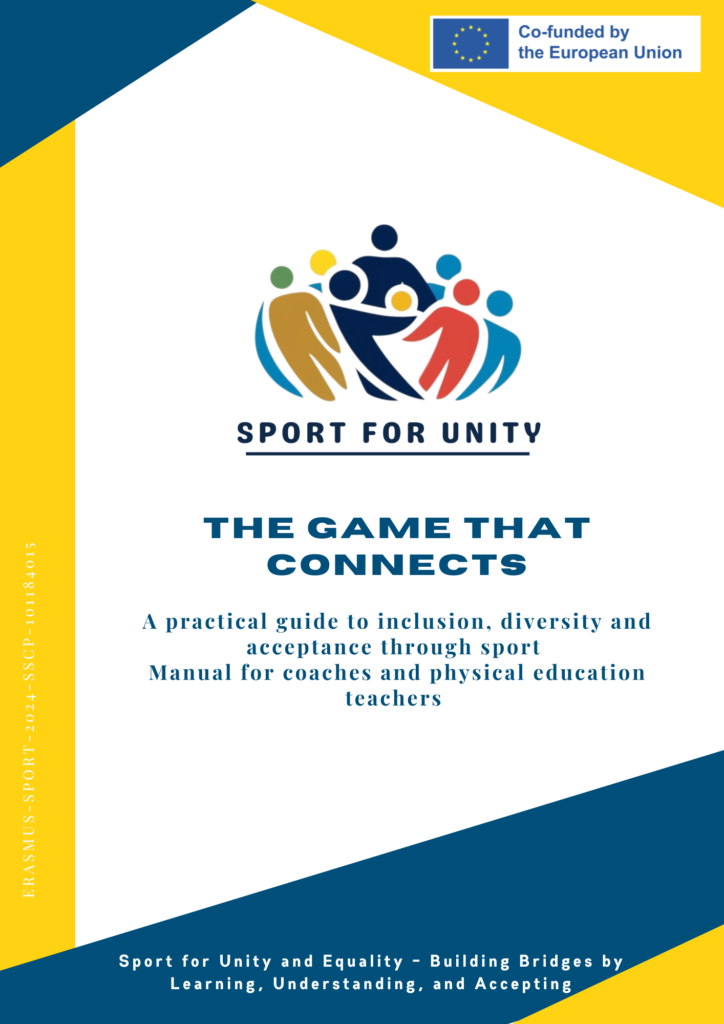
As part of the Erasmus+ Sport project Sport for Unity and Equality – Building Bridges by Learning, Understanding, and Accepting, a digital manual titled “The Game That Connects” was developed as a practical guide for promoting inclusion, diversity, and equality through sport.
The manual was created through the cooperation of partner organizations from Croatia, Italy, and Portugal, with the aim of providing practical methods, workshops, and tools for working with children and young people from different social and cultural backgrounds.
Throughout the project, sport was used as a powerful tool for connection, cooperation, and creating a sense of belonging, especially among children and young people with migrant and refugee backgrounds. The manual highlights how sport can help reduce prejudice, strengthen mutual understanding, and create safe and inclusive environments for all participants.
The digital manual includes:
- a theoretical framework on social inclusion through sport,
- practical workshop models for children, youth, and adults,
- examples of sports and educational activities,
- reflection and evaluation methods,
- recommendations for coaches, teachers, and organizations,
- creative materials, games, and interactive tasks.
Special emphasis is placed on experiential learning through movement, teamwork, and dialogue. Activities such as the “Passport Game,” migration workshops, team challenges, and reflection exercises help participants better understand inclusion, equality, and intercultural dialogue in practice.
The manual is intended for:
- coaches and sports educators,
- physical education teachers,
- sports clubs and organizations,
- associations working with children and youth,
- volunteers and professionals working with migrant and socially vulnerable groups.
Through the Sport for Unity project, it was once again confirmed that sport is not only a physical activity, but also a powerful tool for building empathy, encouraging cooperation, and creating a society based on respect, acceptance, and equal opportunities for all.
The digital manual is available here:
“Funded by the European Union. Views and opinions expressed are however those of the author(s) only and do not necessarily reflect those of the European Union or the European Education and Culture Executive Agency (EACEA). Neither the European Union nor EACEA can be held responsible for them.”
Leave a Reply